
| Restaurant | Gyehyanggak (계향각 · 桂香閣) |
| Cuisine | Qing-dynasty Chinese banquet cuisine (Suiyuan Shidan) |
| Must order | Pagoda Pork (보탑육, pre-order), Seafood Nurungji Soup, Eight-Treasure Duck (팔보오리, pre-order) |
| Price | Roughly ₩70,000–100,000+/person for a shared table with pre-order dishes; à la carte from ₩22,000 |
| Where | Hyehwa / Daehangno, Jongno-gu, Seoul |
| Nearest station | Hyehwa Station (Line 4) — up the Naksan hill, ~8-min walk |
| Hours | Tue–Sun 11:30–22:00 (break 15:00–17:00, LO 14:00 / 21:00) · Closed Mondays |
| Reservation | Reservation only — CatchTable. Pagoda pork & eight-treasure duck must be pre-ordered. |
| Visited | September 2026 |
| Map | Google Maps |
A 1792 Cookbook, a Motorcycle, and a Netflix Chef
Most “Chinese food” in Korea is Korean-Chinese: jjajangmyeon, jjamppong, tangsuyuk. Gyehyanggak (계향각) is something else entirely. Chef Shin Gye-sook (신계숙) — a professor of Chinese cuisine, the motorcycle-riding host of a Korean travel-food show, and a contestant on Netflix’s Culinary Class Wars (흑백요리사) — has spent twenty years studying Suiyuan Shidan (隨園食單), a Qing-dynasty gastronomy manual written in 1792. This restaurant is where those recipes come back to life.
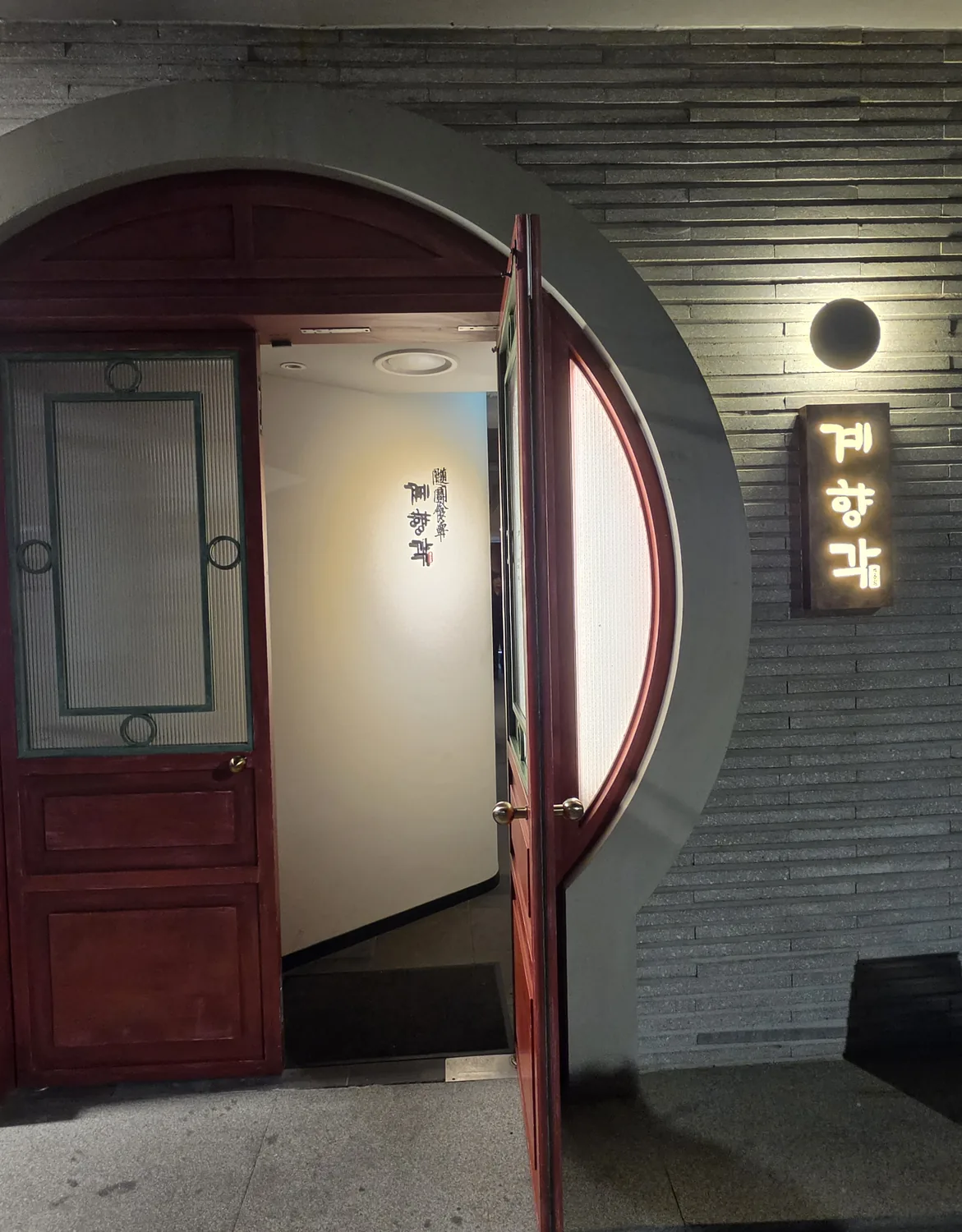 The moon-gate entrance halfway up the Hyehwa hill. You’d walk past it if you weren’t looking.
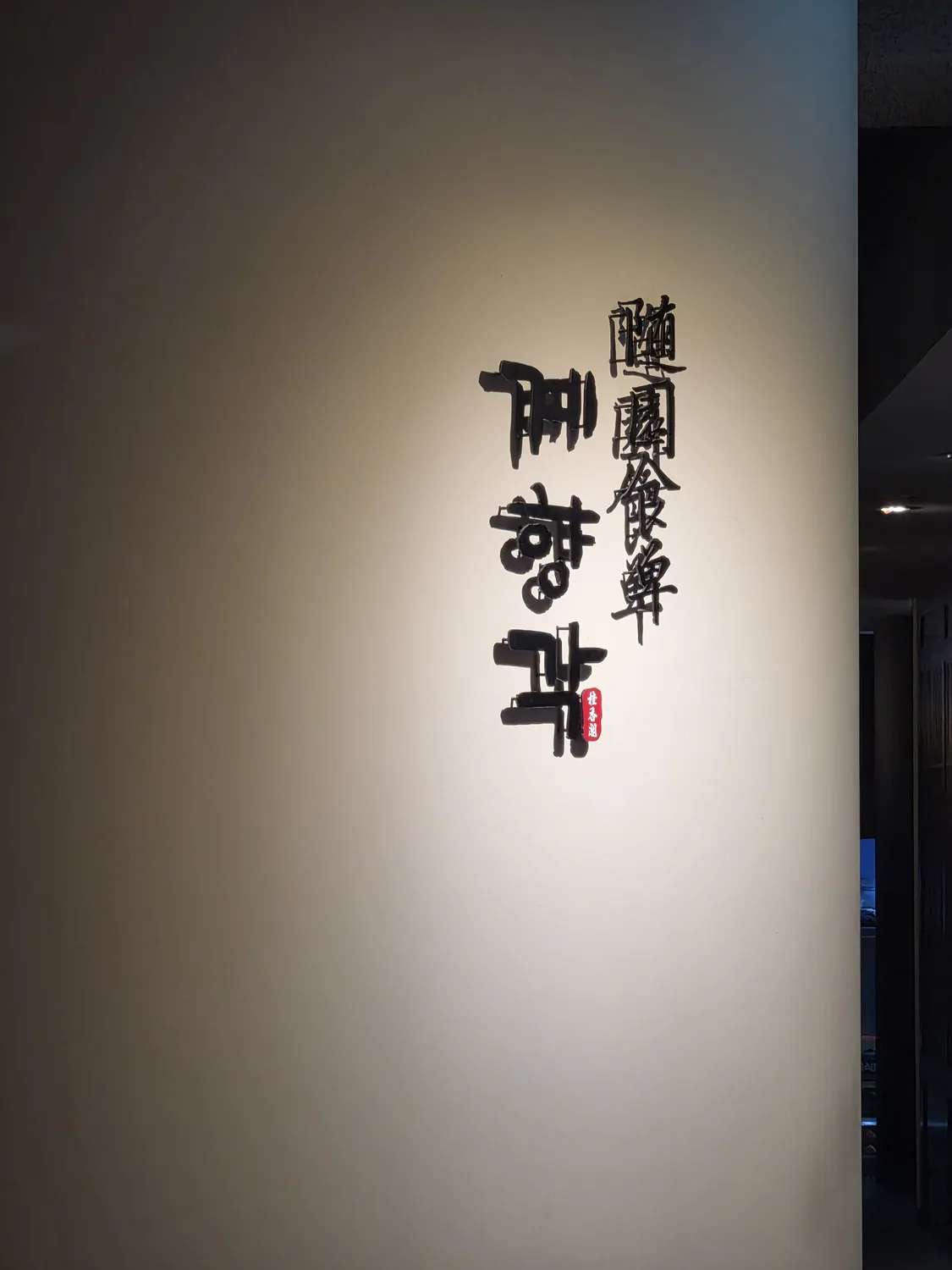 隨園食單 · 桂香閣 — the cookbook and the restaurant, in brush calligraphy by the door.
Fair warning up front: this is drinking food at heart. The flavors run bold — spicy, salty, deeply savory — and they’re built to sit alongside baijiu or beer. We came for a team dinner, booked through CatchTable, and were given a private room with a big lazy-susan table. Even as a non-drinker I’d go back; just know what you’re walking into.
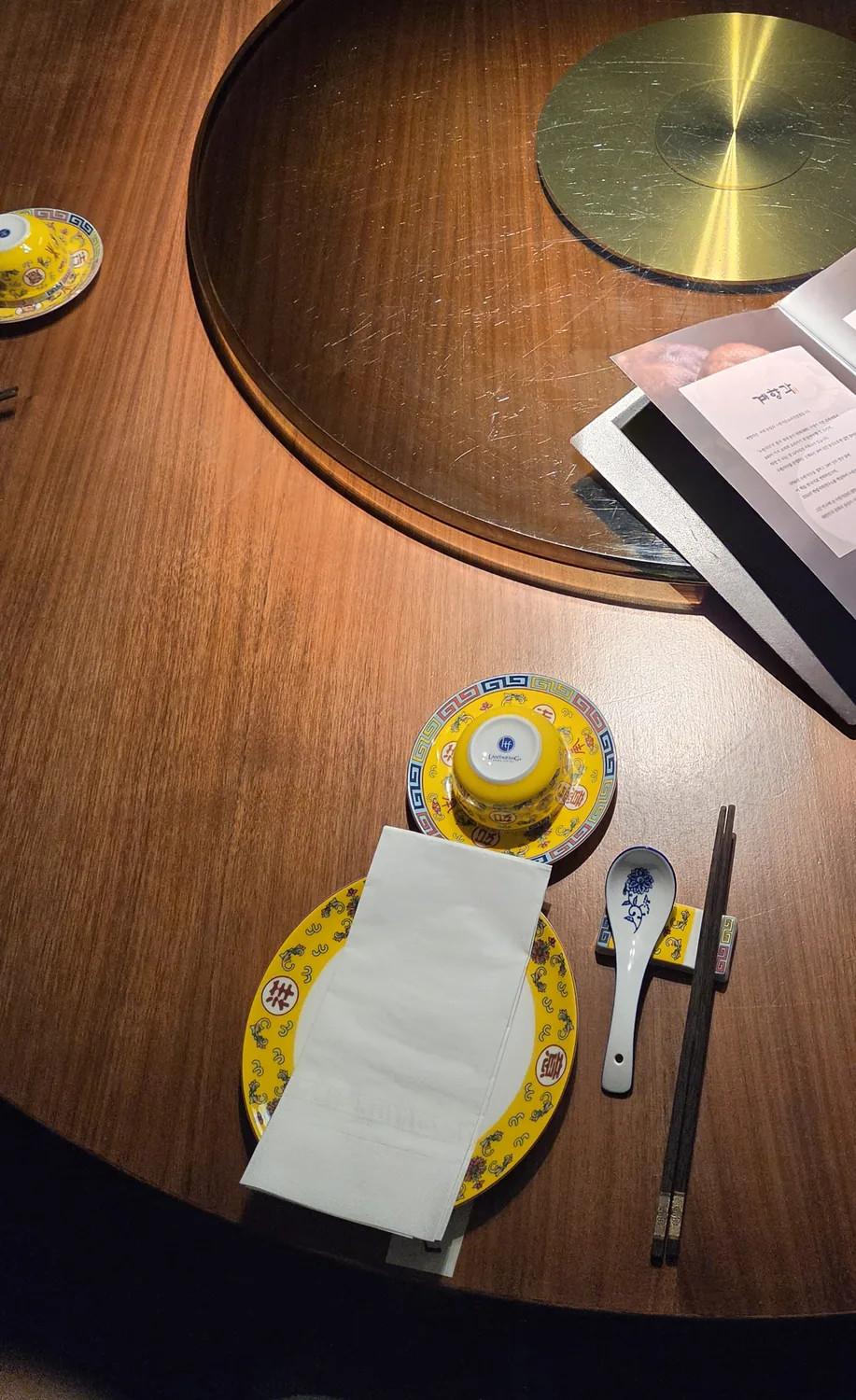 The private room: round table, lazy susan, yellow-glazed plates. Built for a group.
Pagoda Pork (보탑육) — the Netflix Dish
This is the one you saw on the show. Pork belly braised dark and glossy, then stacked into a pagoda — and unlike ordinary dongpo pork, the layers hide bamboo shoots inside. It’s a pre-order dish, so ask for it when you reserve.
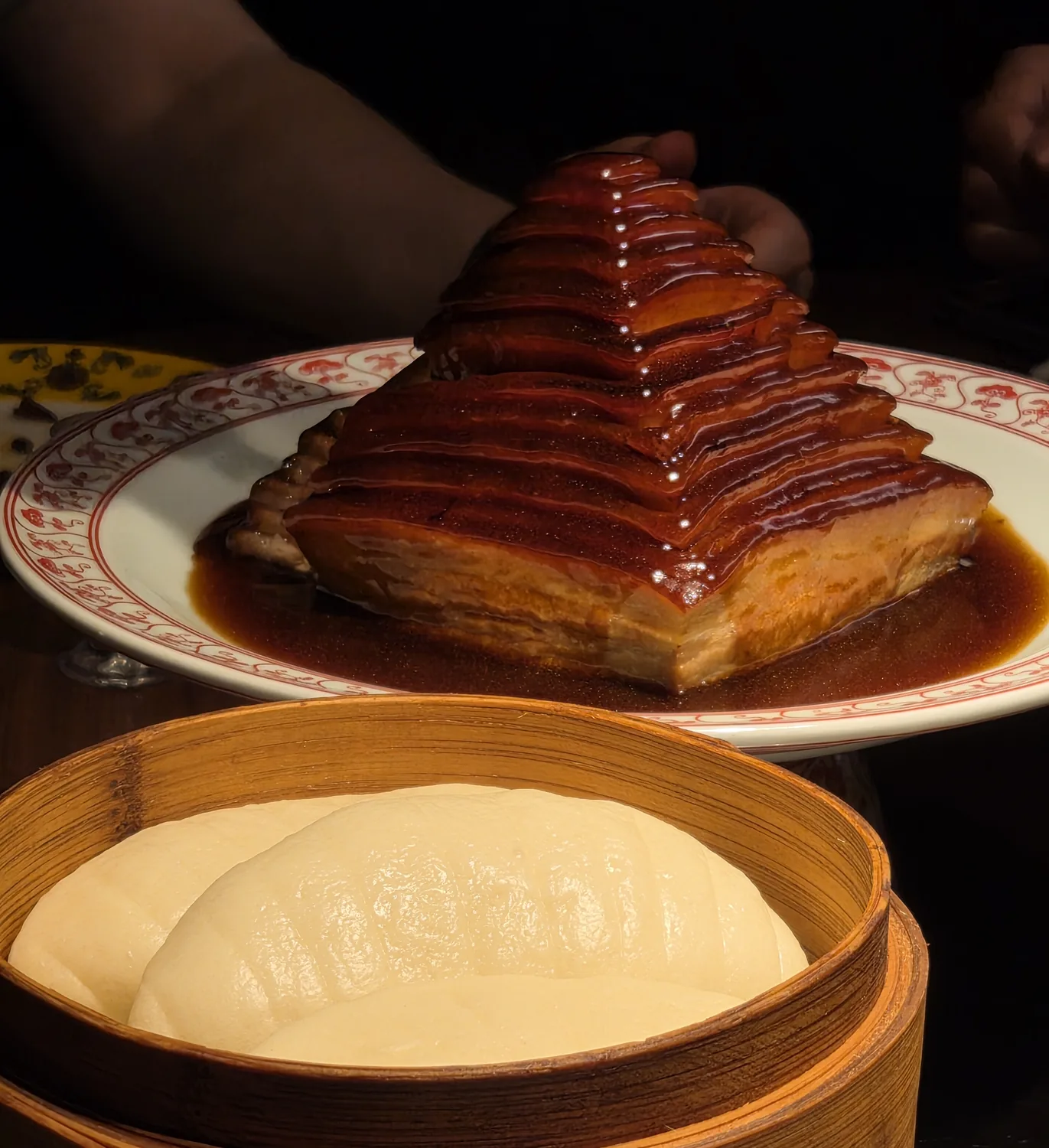 Botapyuk: braised pork belly in a pagoda stack, steamed buns waiting underneath.
Staff cut it at the table; you take a modest portion and wrap it in the steamed bread with a bit of the sauce. That first bite — the collapsing fat, the sweet-savory glaze, the crunch of bamboo — is the reason to come.
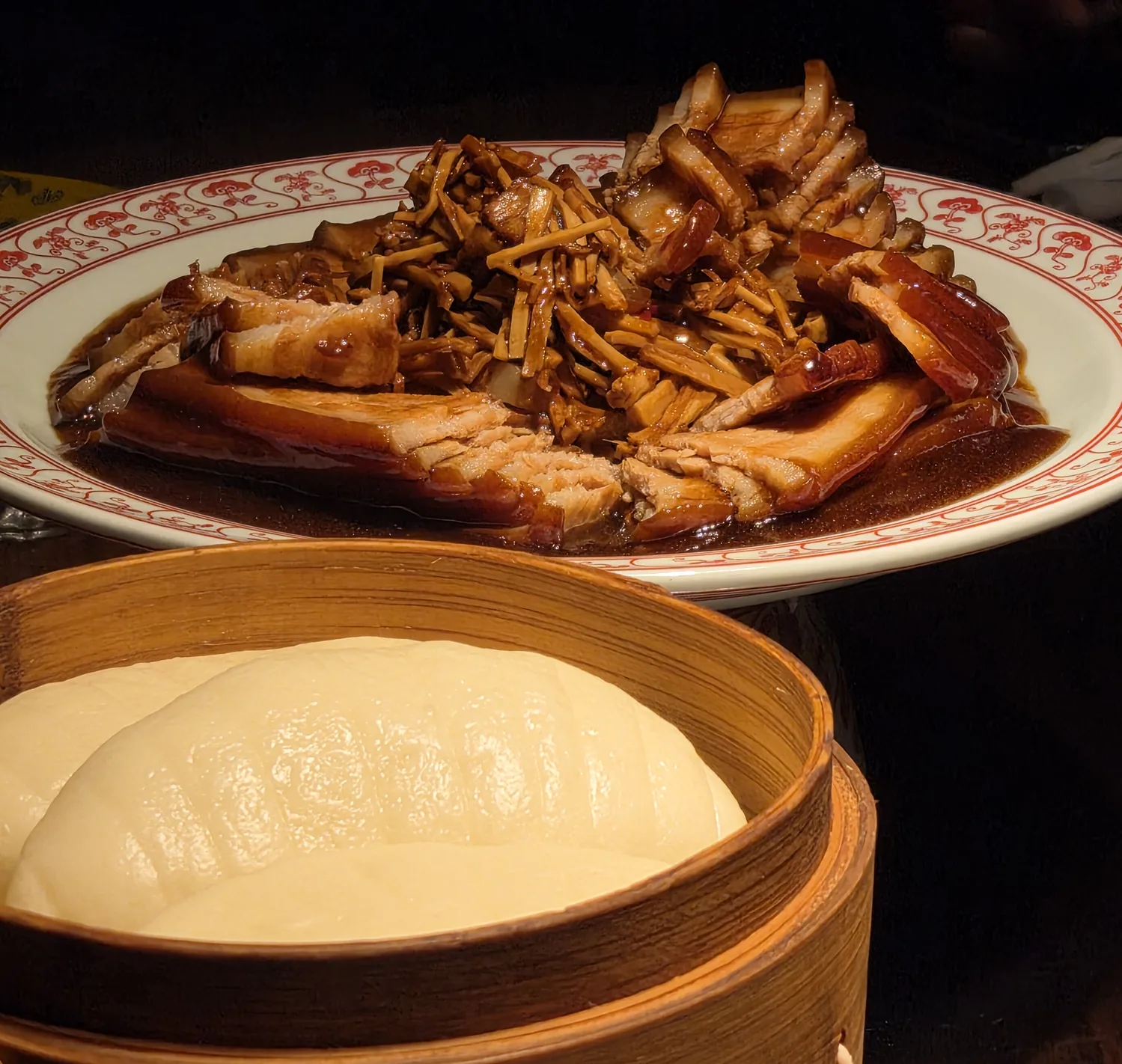 Cut and ready: the bamboo shoots inside are what set it apart from a standard dongpo pork.
Laziji (라즈지) — For Heat Lovers Only
Crispy fried chicken wings buried in a mountain of dried chilies, dusted with Sichuan pepper (산초). Very, very spicy, with that numbing tingle. If mala is your thing, this is excellent; if not, skip it — there’s nothing gentle about it.
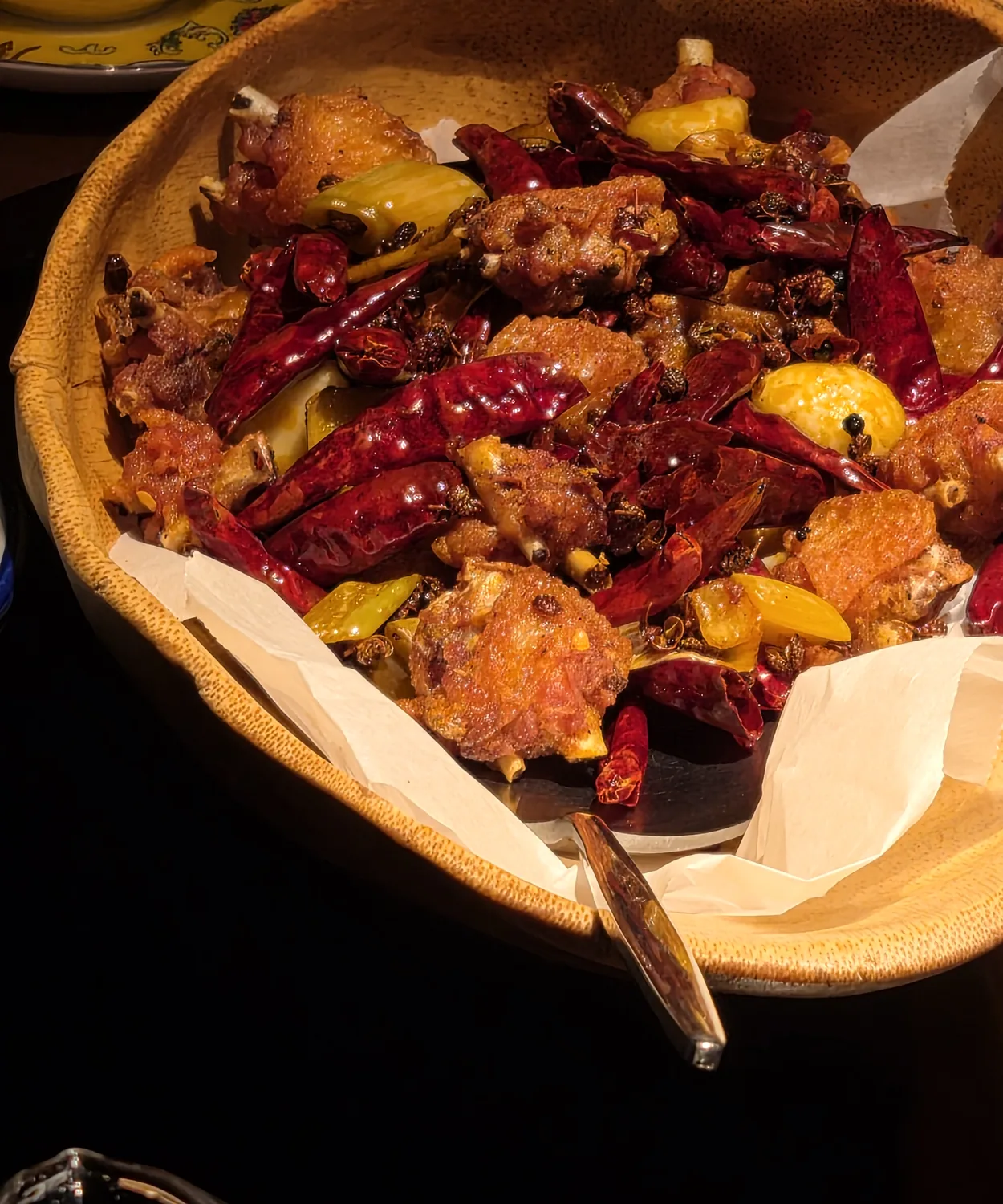 Wings under a pile of dried chilies. Fish them out, don’t eat the chilies.
Seafood Nurungji Soup (해물누룽지탕) — My Favorite
Of everything on the table, this was the dish where the seasoning landed exactly right for me. Scorched rice softened in a rich seafood broth with scallops, shrimp, mushrooms, and bamboo shoots — the softest nurungji I’ve had, and the bamboo and seafood in real harmony. Order this for balance between the spicier plates.
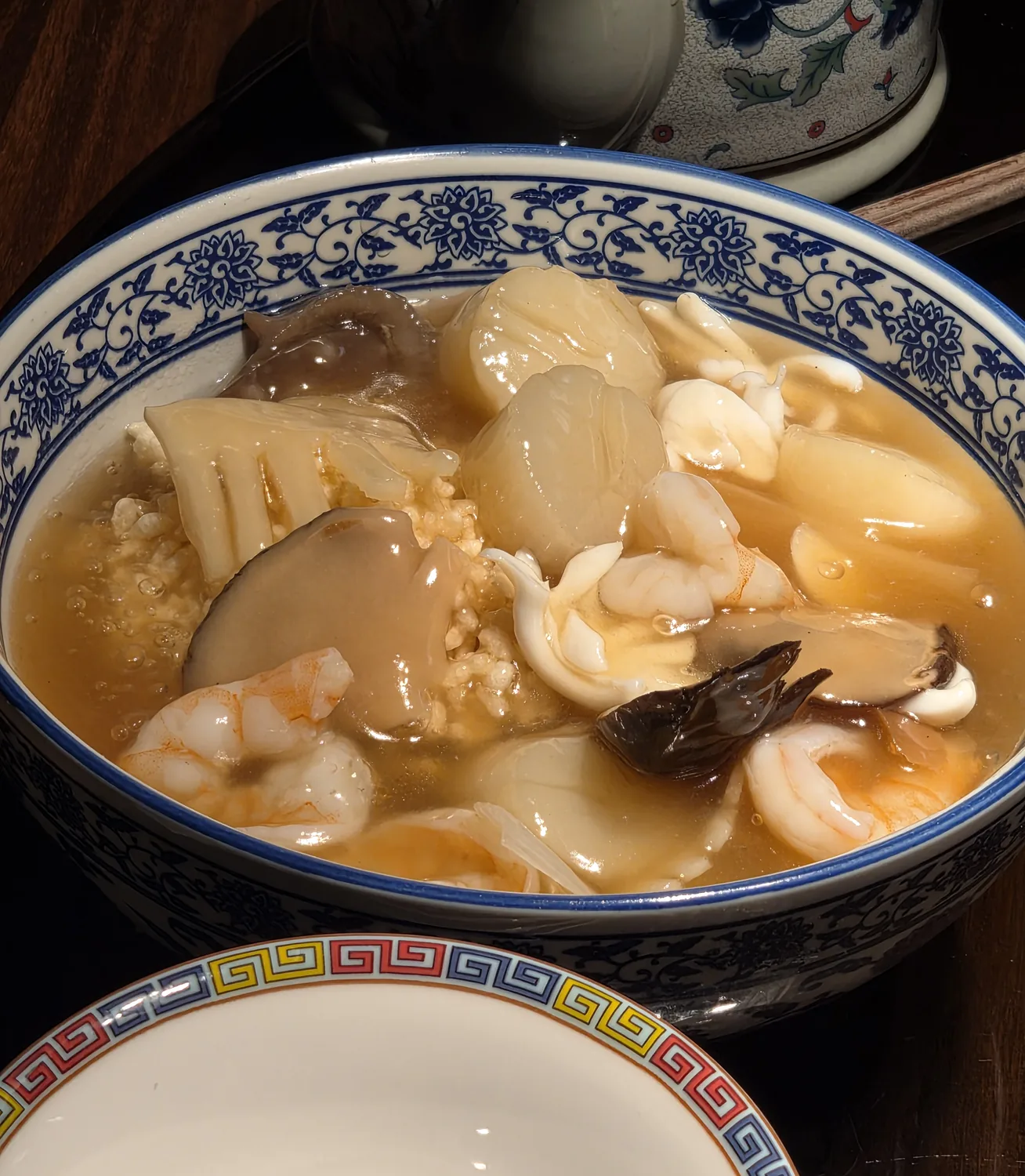 Seafood nurungji-tang — scallops, shrimp, bamboo shoots, and the softest scorched rice.
Eight-Treasure Duck (팔보오리) — 18 Hours, Imperial Banquet
The other pre-order showpiece. A whole duck stuffed with “eight treasures” (glutinous rice and a mix of fillings), prepared over roughly 18 hours. This is banquet food — what an emperor’s table would serve — and it tastes like it: rich, restorative, almost medicinal in the best way.
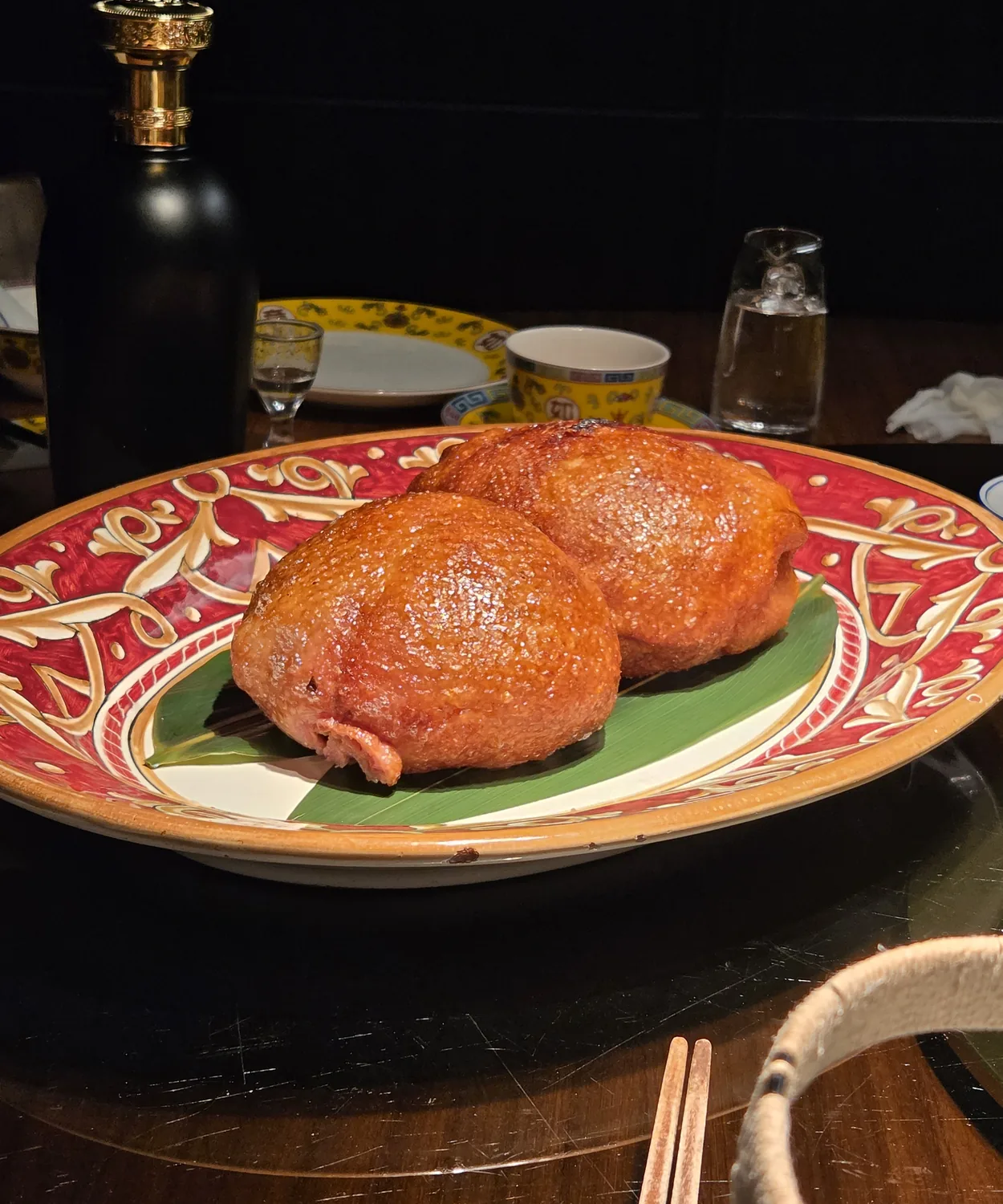 Palbo-ori, whole. Golden, lacquered, and about to be opened.
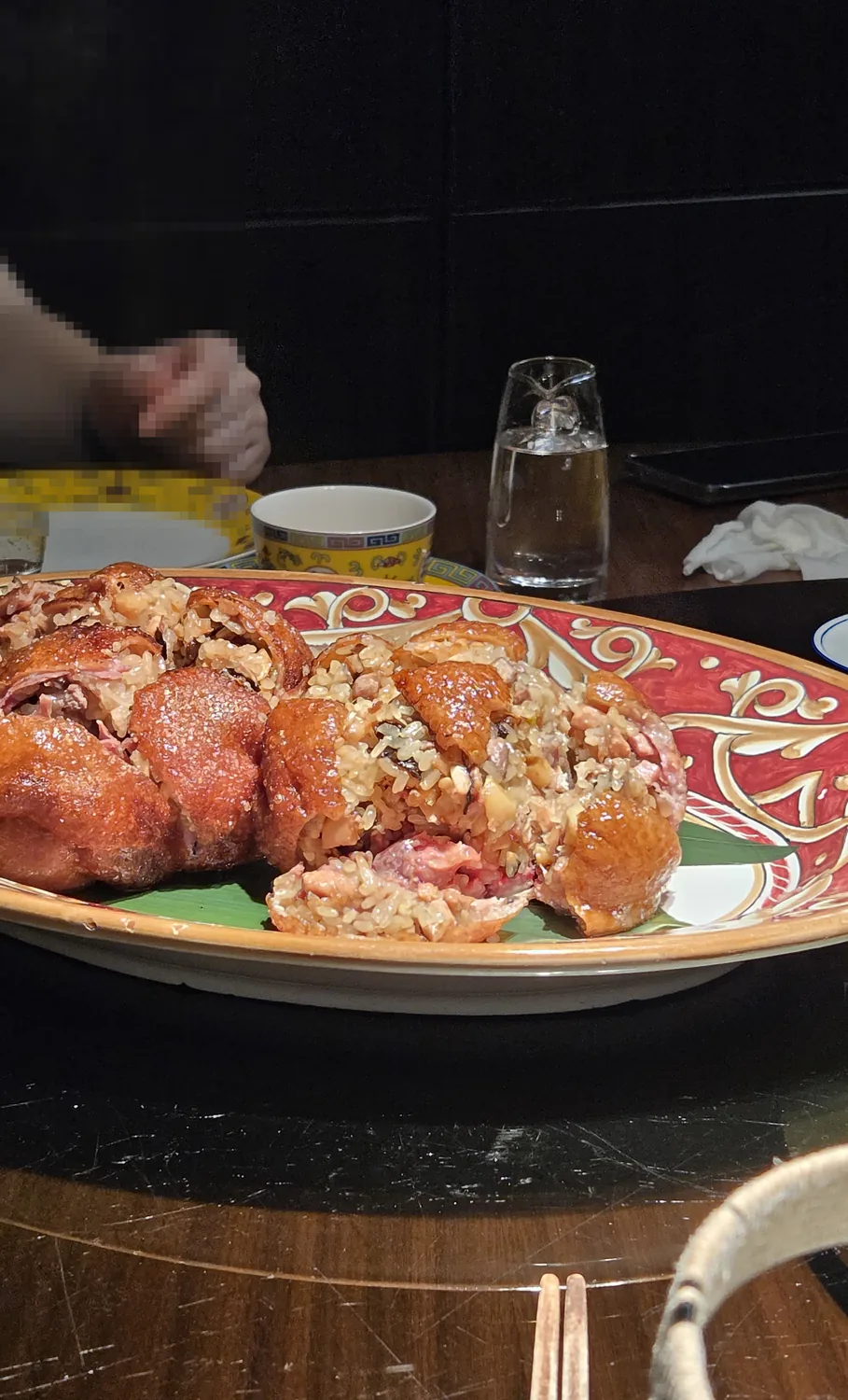 Opened at the table: the eight-treasure stuffing inside.
After the spicy dishes it reads as a calm, nourishing finale. If it feels mild to you, pair a bite with the cold appetizer (냉채) — the seasoning clicks into place.
Lamb with Scallions (양고기파볶음)
Lamb shoulder, so it’s tender, stir-fried hard with big pieces of scallion. Zero gaminess — the scallion oil handles that — and unlike a few other plates, not salty at all. The crunchy scallion is half the pleasure.
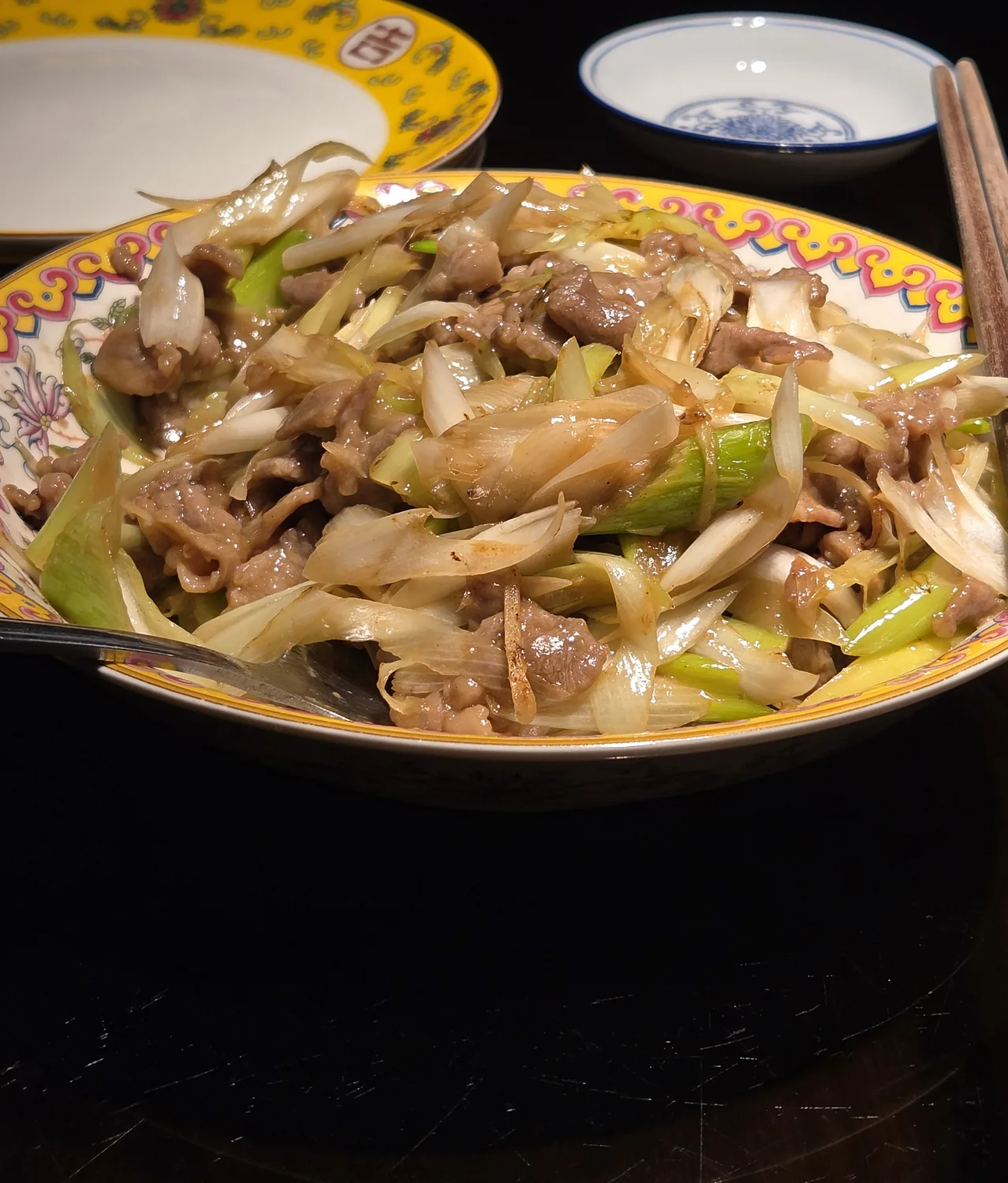 Yanggogi-pa-bokkeum: lamb shoulder and crisp scallions, no gaminess whatsoever.
Rice and Noodles
We finished with seafood fried rice (해선볶음밥), suancai tang-mian (솬차이탕면, pickled-cabbage noodle soup), and cong-you ban-mian (총유반면, scallion-oil noodles). The fried rice is the familiar one — note there’s no jjamppong broth or egg soup on the side like at Korean-Chinese places. The two noodle dishes tasted like the real thing from China, which is the whole point of this restaurant.
Honest Verdict — ★4.4
It’s expensive, and a couple of dishes lean hard on salt — whether that’s the Suiyuan style or just the drinking-food framing, I can’t say. But you get to eat a range of Chinese cooking that simply doesn’t exist elsewhere in Korea, some of it (the pagoda pork, the nurungji soup) truly outstanding. Private room, fun location halfway up the Hyehwa hill, and a menu long enough that we’re already planning a return to try the rest. If you drink, bump the score up half a star.
- Gyeongbokgung, Hanok Village & Gwangjang Market tour →Street food finale at Gwangjang
- NANTA cooking-comedy show →No Korean needed, 100 min
- Korea 5G eSIM (SKT) — unlimited data →Set up before you land; no SIM swap
- WOWPASS prepaid card + T-money →For restaurants that don't take foreign cards
Practical Info
| Restaurant | Gyehyanggak 계향각 (桂香閣) |
| Chef | Shin Gye-sook 신계숙 — Netflix Culinary Class Wars |
| Cuisine | Qing-dynasty Chinese banquet (Suiyuan Shidan recreations) |
| Address | 서울 종로구 동숭길 86, 1F |
| Hours | Tue–Sun 11:30–22:00 · break 15:00–17:00 · LO 14:00 / 21:00 · closed Mon |
| Price | ~₩70,000–100,000+ per person for a shared table with pre-order dishes; à la carte from ₩22,000 |
| Reservation | Required — CatchTable · 02-3672-6004. Pre-order pagoda pork & eight-treasure duck |
| Must order | Pagoda pork · Seafood nurungji soup · Eight-treasure duck · Lamb with scallions |
| Naver Map (KR) | naver.me/I55akS7M |
| Korean review (한국어 후기) | blog.naver.com/review_worrier |
From Hyehwa Station (혜화역, Line 4) walk about 8 minutes up the hill toward Naksan Park; the round moon gate on Dongsung-gil is the entrance. Book a few days ahead and request the pre-order dishes when reserving — they can’t be added on the day.
FAQ
Q: What is Gyehyanggak (계향각)? A: A Chinese restaurant in Hyehwa run by Chef Shin Gye-sook, a professor of Chinese cuisine and Netflix Culinary Class Wars contestant. She recreates dishes from Suiyuan Shidan, a Qing-dynasty cookbook from 1792 — so the menu is unlike any Chinese food elsewhere in Korea.
Q: What should I order at Gyehyanggak? A: Pagoda pork (보탑육) eaten in steamed buns and the seafood nurungji soup are the must-orders. The eight-treasure duck (팔보오리) is an 18-hour banquet dish that needs pre-ordering. Add laziji only if you love serious heat.
Q: Do I need a reservation? A: Yes — reservation only, through CatchTable. The pagoda pork and eight-treasure duck are pre-order dishes; request them when booking.
Q: How much does Gyehyanggak cost? A: It’s on the expensive side. À la carte plates start around ₩22,000, and a full shared table with the pre-order showpieces runs roughly ₩70,000–100,000+ per person. Best value as a group.
Q: Is it good for non-drinkers? A: The food is built as drinking food — bold, salty, spicy — but the pagoda pork, nurungji soup, and lamb are excellent on their own. Non-drinkers will still enjoy it; drinkers will love it.
Q: How do I get to Gyehyanggak in Hyehwa? A: Line 4 to Hyehwa Station, then about 8 minutes on foot up the hill toward Naksan Park. The entrance is a round moon gate on Dongsung-gil.