
The Real Korean Soul Food
I’ve been writing about fine dining and Japanese noodles, but it just hit me — I haven’t introduced any truly Korean food yet. And when I say truly Korean, I mean the kind of dish that Korean men consider one of the three sacred soul foods: sundaeguk (순대국밥), or sundae (Korean blood sausage) soup with rice.
If you’re a foreigner in Seoul, open to meat, and craving something hot and deeply comforting — this is the dish, and Sundae Silrok (순대실록) is the place.
What Is Sundaeguk?
Sundaeguk is a hearty pork broth soup loaded with sundae (Korean blood sausage made with glass noodles and pork intestine), alongside chunks of pork, offal, and sometimes napa cabbage. It comes bubbling hot in a stone pot with a bowl of rice on the side. It’s the kind of food that warms your entire body from the first sip — the ultimate Korean comfort meal.
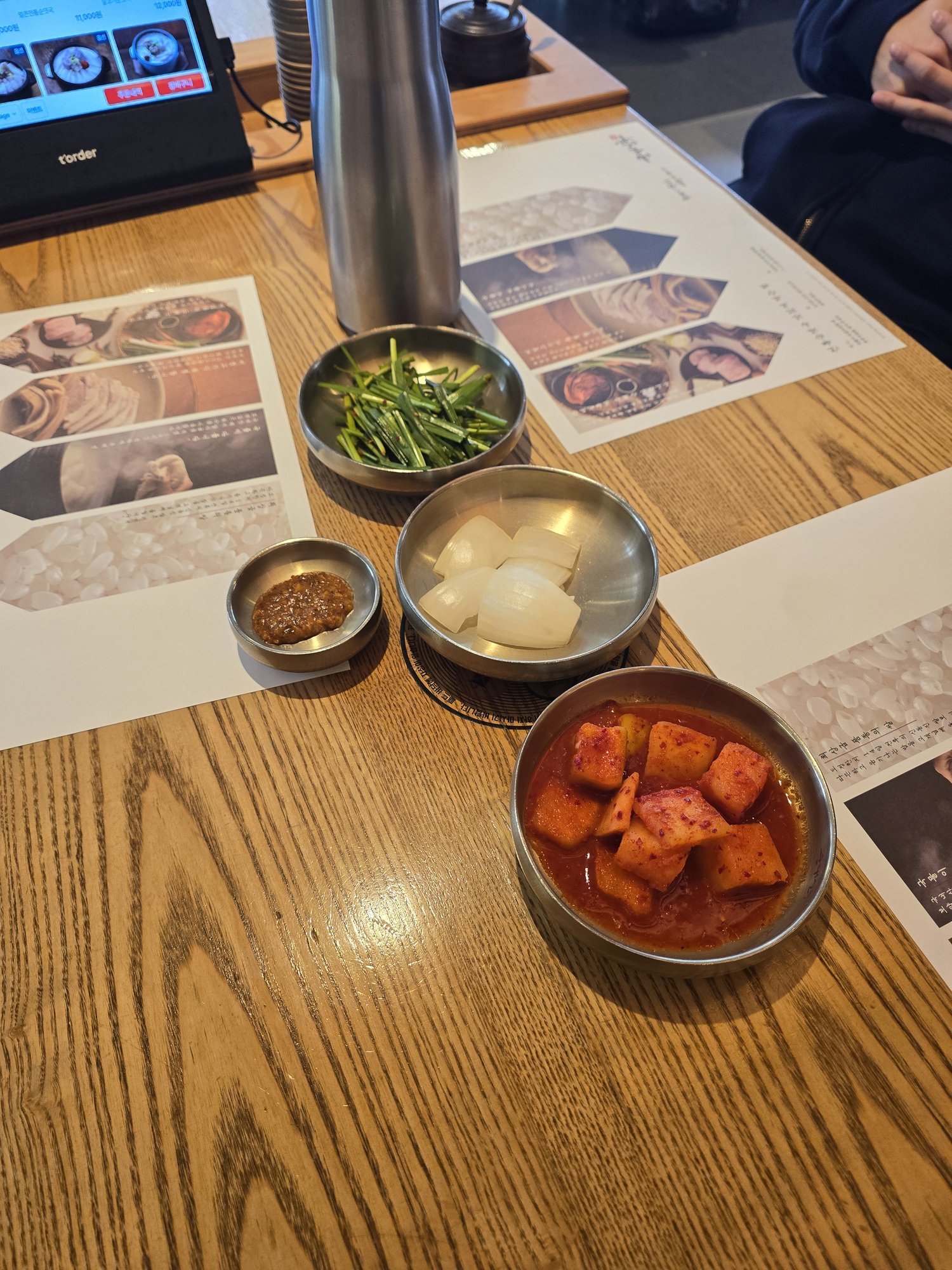 The table setup — banchan, ssamjang, and a tablet for ordering. Ready for action.
The “Special” Bowl: Go Big or Go Home
My coworkers and I come here at least once every two weeks, and we always order the same thing: Traditional Sundaeguk “Special” (전통순대국밥 특). The “special” means extra everything — more sundae, more meat, more of that milky pork broth. It’s generous, filling, and the kind of meal that carries you through the entire afternoon without a single snack craving.
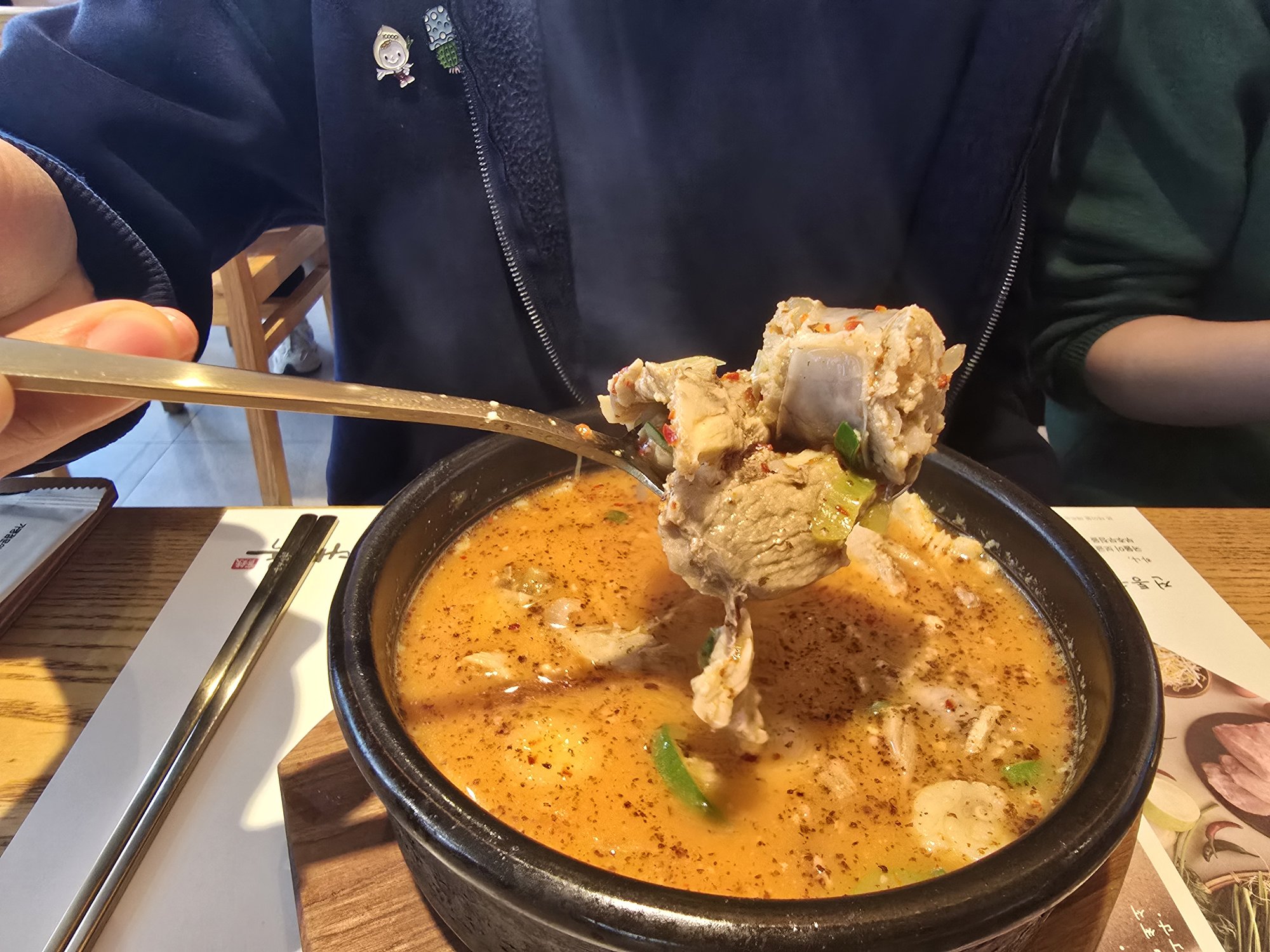 The “Special” — look at those thick chunks of sundae and pork. This is not a light lunch.
I’ll be honest — when the bowl arrived, my hands moved faster than my brain. I started eating before I remembered I was supposed to photograph it first. So yes, the photo has a spoon already in action. Real reviews come from real hunger.
The Secret Formula: Chives + Perilla Powder
Here’s how the regulars eat it. First, grab a huge handful of chives (부추) — or as they call it in Busan, jeongguji (정구지) — and drop them right into the soup. Then scoop two big spoonfuls of perilla seed powder (들깨가루) from the black pot on the table and sprinkle it on top.
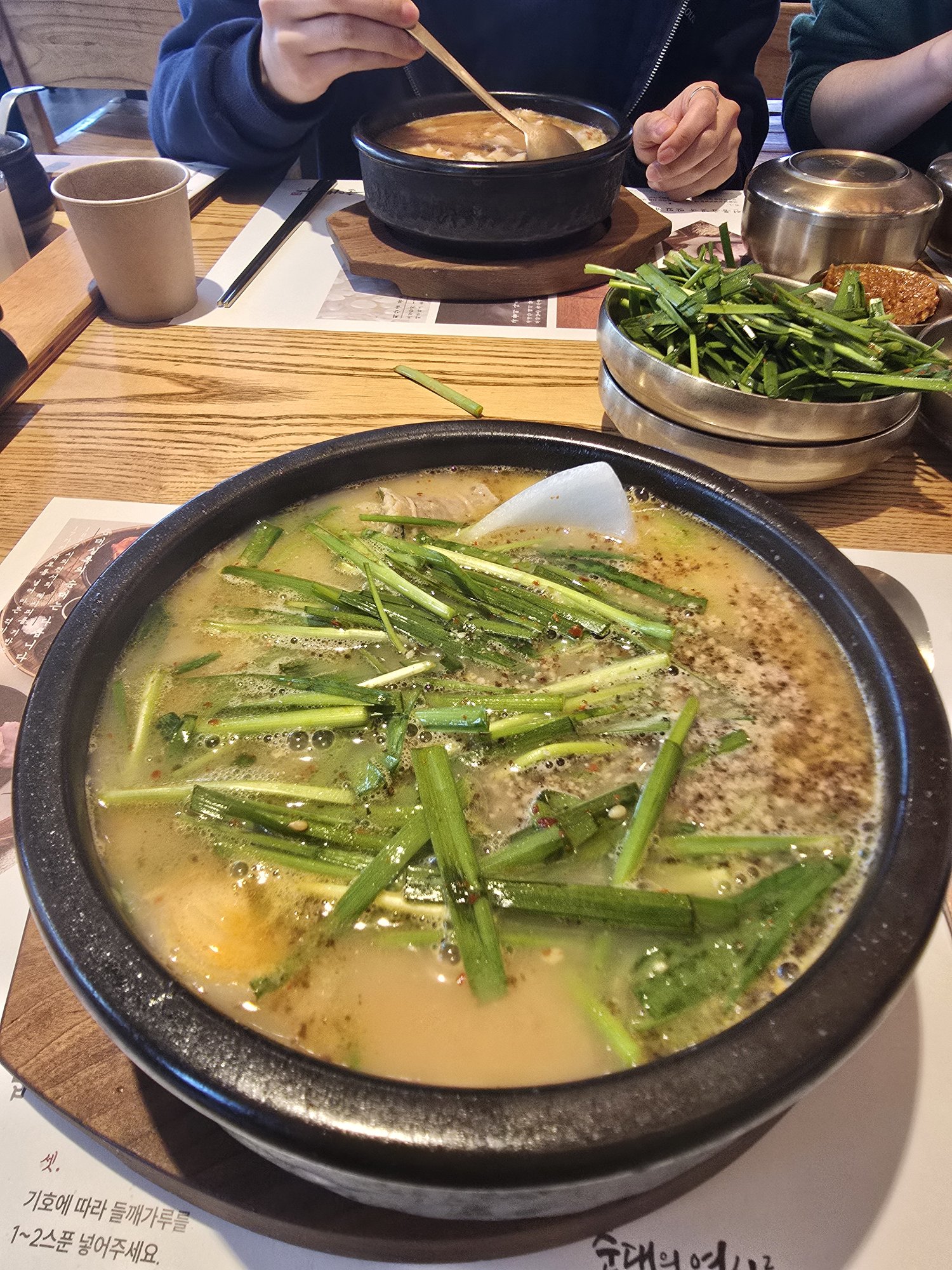
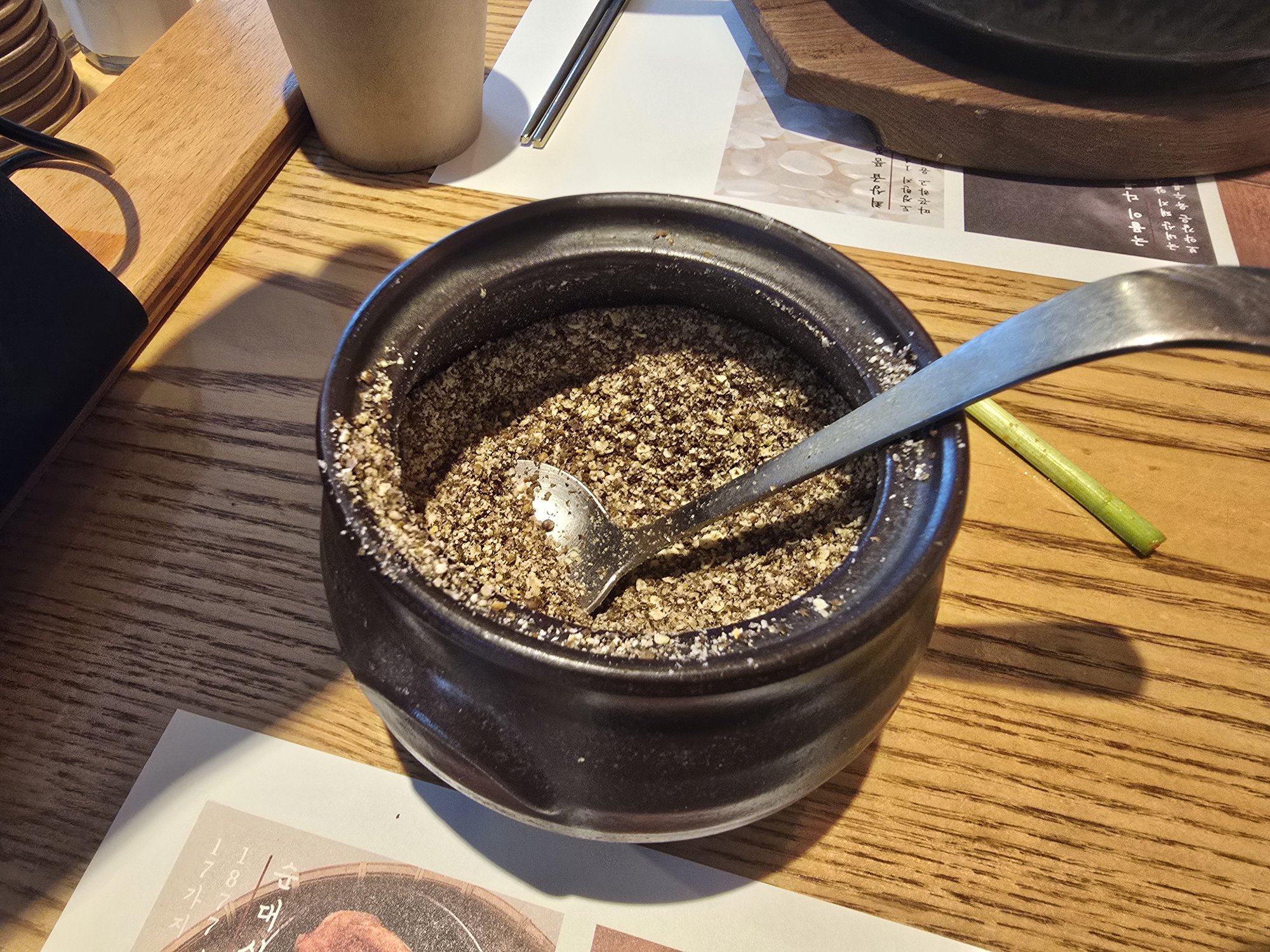
Left: My bowl after the chive-and-perilla treatment. Right: The perilla powder pot — don’t be shy, two spoonfuls minimum.
The broth transforms. The perilla adds this nutty, earthy depth that rounds out the rich pork flavor, and the chives give a fresh, sharp bite in every spoonful. Of course you can season it however you like — salt, pepper, chili — but trust me on the chives-and-perilla combo. It’s the way to go.
The Ssamjang Is Something Else
Most Korean restaurants have decent ssamjang (쌈장, fermented bean paste dip), but Sundae Silrok’s version is on another level. They make it in-house, and it’s got this perfect balance of savory, slightly sweet, and just a hint of spice. Grab a piece of sundae, dip it in the ssamjang, pop it in your mouth — that’s peak Korean dining right there.
The Banchan Bar: Self-Serve Heaven
One of the best parts? The self-serve banchan station. You walk up and load your tray with whatever you want: kkakdugi (cubed radish kimchi), fresh chives, raw garlic, green chili peppers, pickled onion, and that incredible house ssamjang. There’s a sign that says “버려지는 음식이 너무 많습니다” (too much food is being wasted) — so take what you need, but eat everything you take.
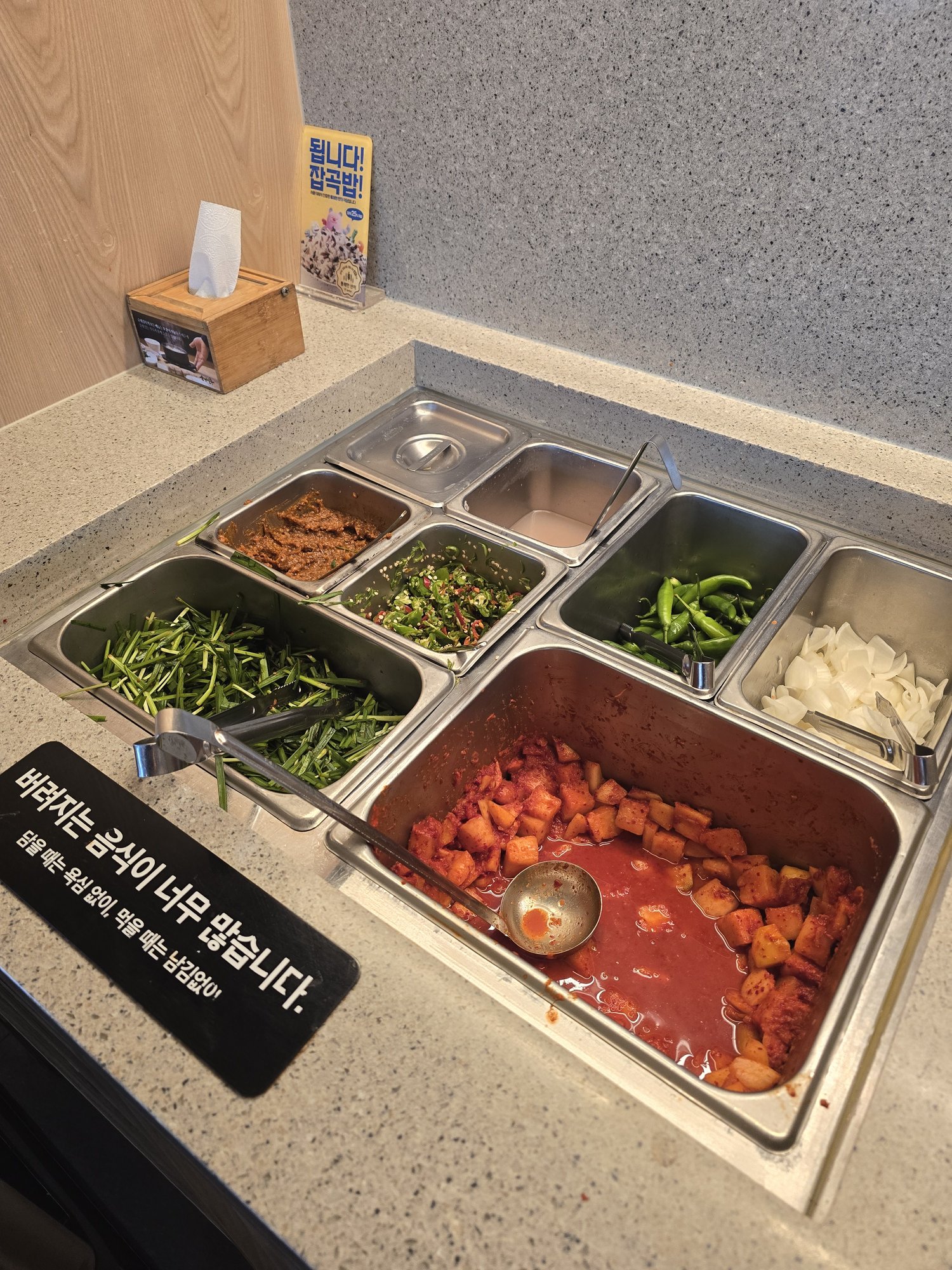 The banchan bar — kkakdugi, chives, green peppers, ssamjang, pickled onion, and more. All free, all self-serve.
The kkakdugi deserves special mention. It’s fresh, crunchy, and perfectly fermented — the ideal companion to a rich, hot bowl of sundaeguk. You need that tangy crunch to cut through the heavy broth.
Bonus: Frozen Sikhye & Omija
After your meal, swing by the drink machine near the counter. They have frozen sikhye (식혜), a traditional Korean sweet rice punch, and omija (오미자), a five-flavor berry drink — both ₩2,500 each. The icy sikhye after a steaming bowl of sundaeguk is chef’s kiss. Perfect palate cleanser.
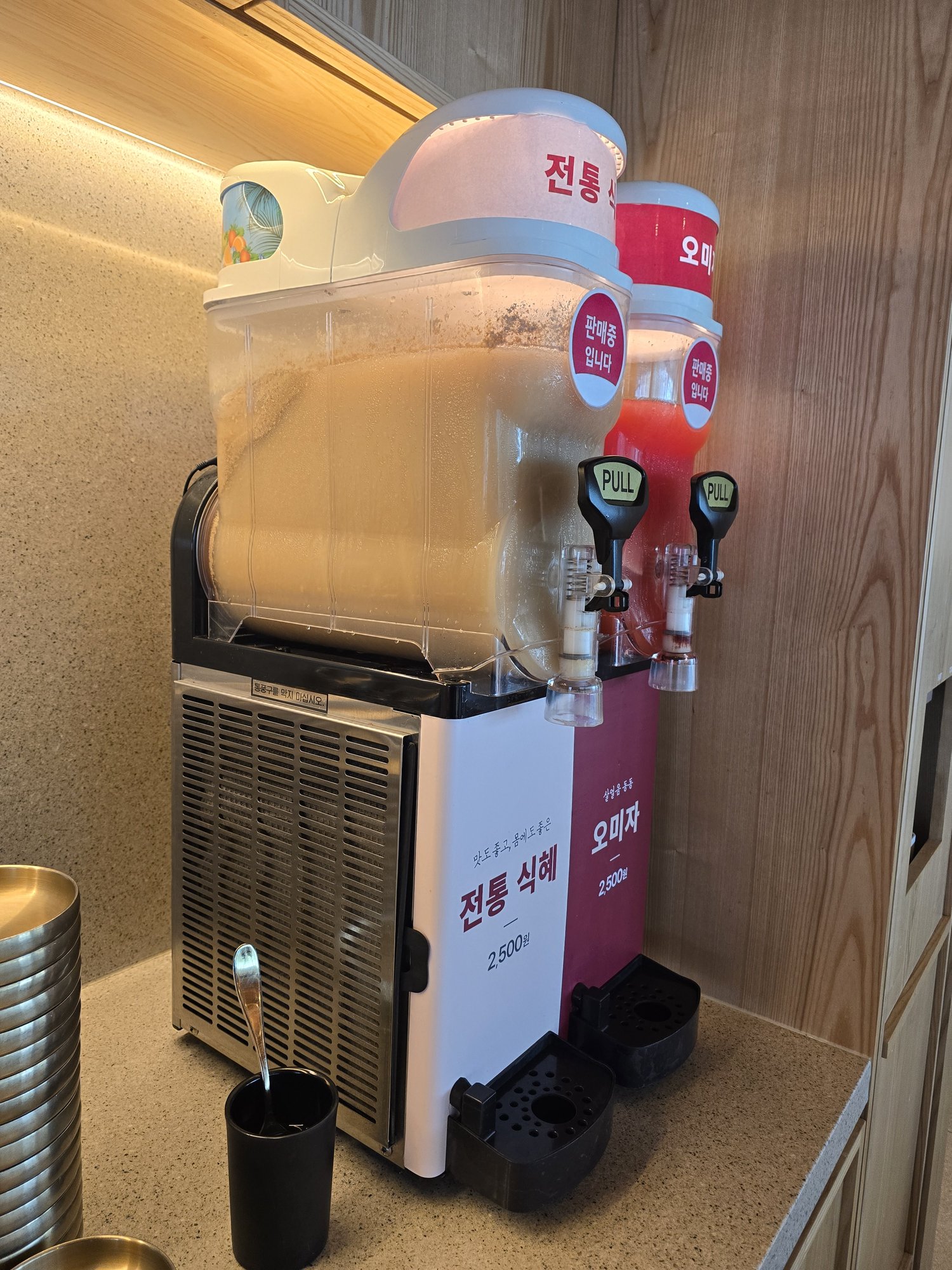 Frozen traditional sikhye (left) and omija punch (right) — ₩2,500 each. The perfect way to finish.
Even in Summer, I Eat This
There’s a Korean saying: 이열치열 (“Beat the heat with hot food”) — fight heat with heat. Even in the dead of July, when Seoul feels like a sauna, I’m still ordering sundaeguk. There’s something about sweating through a hot bowl of soup on a summer afternoon that just resets your entire system. Some people reach for iced coffee; I reach for boiling pork broth. No regrets.
Why This Place Stands Out
There are plenty of famous sundaeguk joints in Seoul. But what makes Sundae Silrok special is the combination: clean, modern interior + massive portions + right in the city center. Finding a gukbap spot that ticks all three boxes is rarer than you’d think. Most legendary gukbap places are tucked away in old neighborhoods or require a trip to the outskirts. This one? It’s right here, easy to get to, and the quality is consistently excellent.
Practical Info
| Detail | Info |
|---|---|
| Restaurant | Sundae Silrok (순대실록) |
| What to Order | Traditional Sundaeguk Special (전통순대국밥 특) |
| Price | ~₩10,000–₩13,000 |
| Ordering | Tablet at table |
| Banchan | Self-serve (free refills) |
| Drinks | Frozen sikhye & omija (₩2,500 each) |
| Pro Tip | Add chives + 2 spoonfuls of perilla powder |
| Naver Map | Link |
| Google Maps | Link |
FAQ
Q: What is sundae (순대)? A: Korean sundae is a type of blood sausage — pork intestine stuffed with glass noodles (dangmyeon), barley, pork blood, and vegetables, then steamed. It has a soft, chewy texture and mild savory flavor. It’s nothing like Western sausage — think of it as a completely different category.
Q: Is sundaeguk safe for people with dietary restrictions? A: Sundaeguk contains pork, pork blood, and offal (intestines, liver). It’s not suitable for vegetarians, pescatarians, or those who avoid pork. If you’re open to adventurous meat dishes, you’ll love it.
Q: What does “Special (특)” mean on the menu? A: “특” means the upgraded portion — more sundae, more meat, bigger serving. It’s usually ₩2,000–3,000 more than the regular size and absolutely worth it.
Q: How do Korean locals eat sundaeguk? A: Most locals add a generous amount of chives (부추) and perilla seed powder (들깨가루) into the soup, then season with salt or shrimp paste (새우젓) to taste. The rice can be eaten separately or dunked directly into the broth.
Q: Is Sundae Silrok foreigner-friendly? A: The ordering is done via a tablet at your table, and the banchan is self-serve, so there’s minimal language barrier. The menu has photos. Point, tap, eat.
Q: When is the best time to visit? A: Lunch rush (12:00–13:00) gets busy, but turnover is fast. Off-peak hours (14:00–16:00) are ideal if you want a relaxed meal. And yes — even in summer. Especially in summer.