
A 10-Minute Walk That’s 100% Worth It
I’ll be honest — there are plenty of decent lunch spots within a 2-minute radius of my office. But once you’ve had the mazesoba at Kanda Soba (칸다소바), you’ll happily walk 10 minutes in the cold for it. That’s exactly what my coworkers and I do, regularly.
Kanda Soba is a Tokyo-style mazesoba (まぜそば) and ramen joint. If you’re not familiar with mazesoba, it’s basically ramen without the broth — thick noodles tossed in a rich, savory sauce with a variety of toppings. Think of it as the “dry” version of ramen, and honestly, sometimes it hits harder than the soup kind.
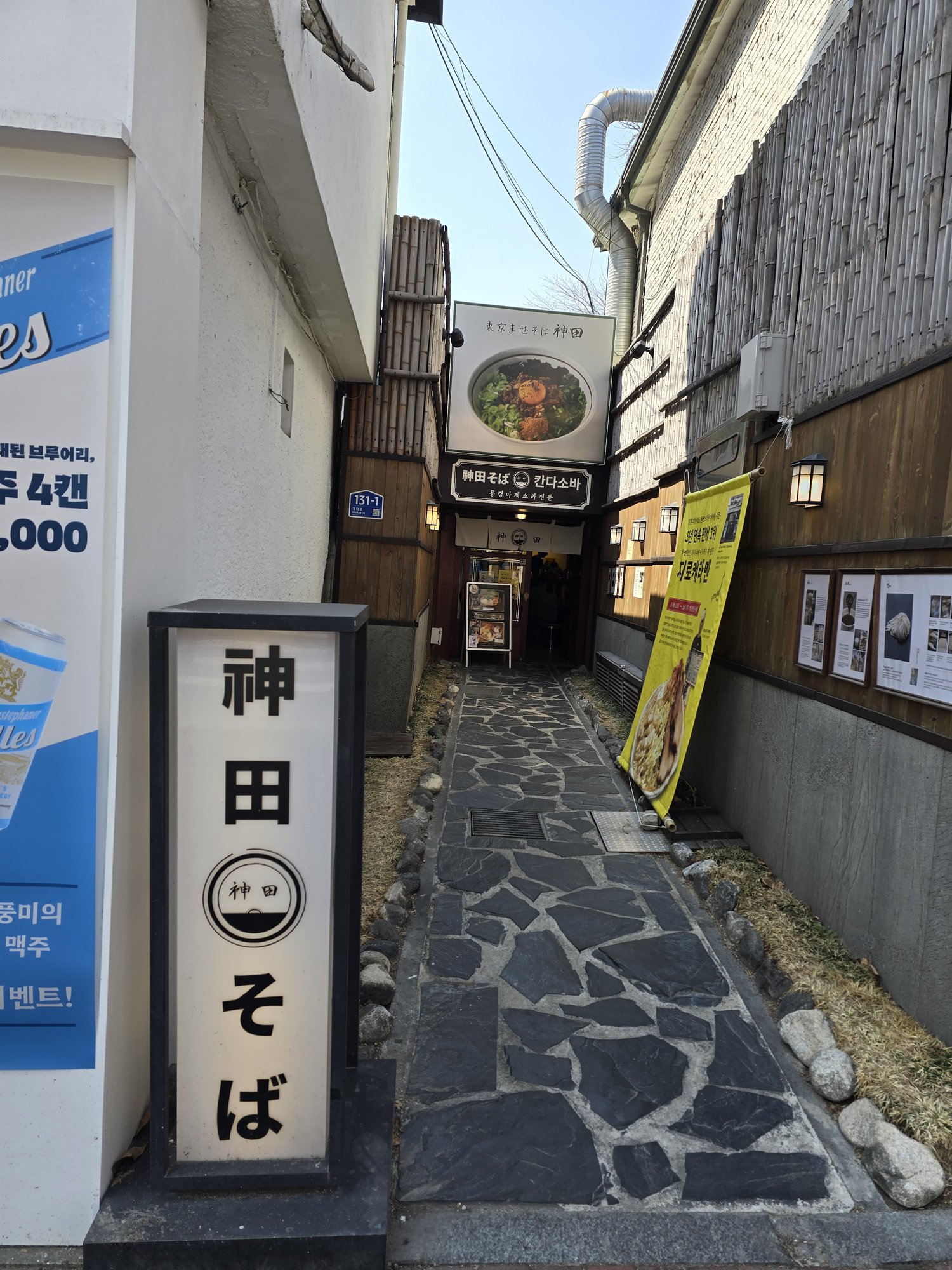 The narrow alley entrance — easy to miss, impossible to forget once you’ve found it
The Mazesoba: My Top 3. Period.
I’ve eaten my way through a lot of noodle spots in Seoul, but Kanda Soba’s mazesoba is firmly in my top 3 of all time. It arrives in a big white bowl — a mountain of rich, spicy meat sauce with a raw egg yolk sitting right on top like a golden crown. Surrounding it: finely sliced green onions, chopped chives, crumbled dried fish powder, and generous sheets of crispy seaweed (nori).
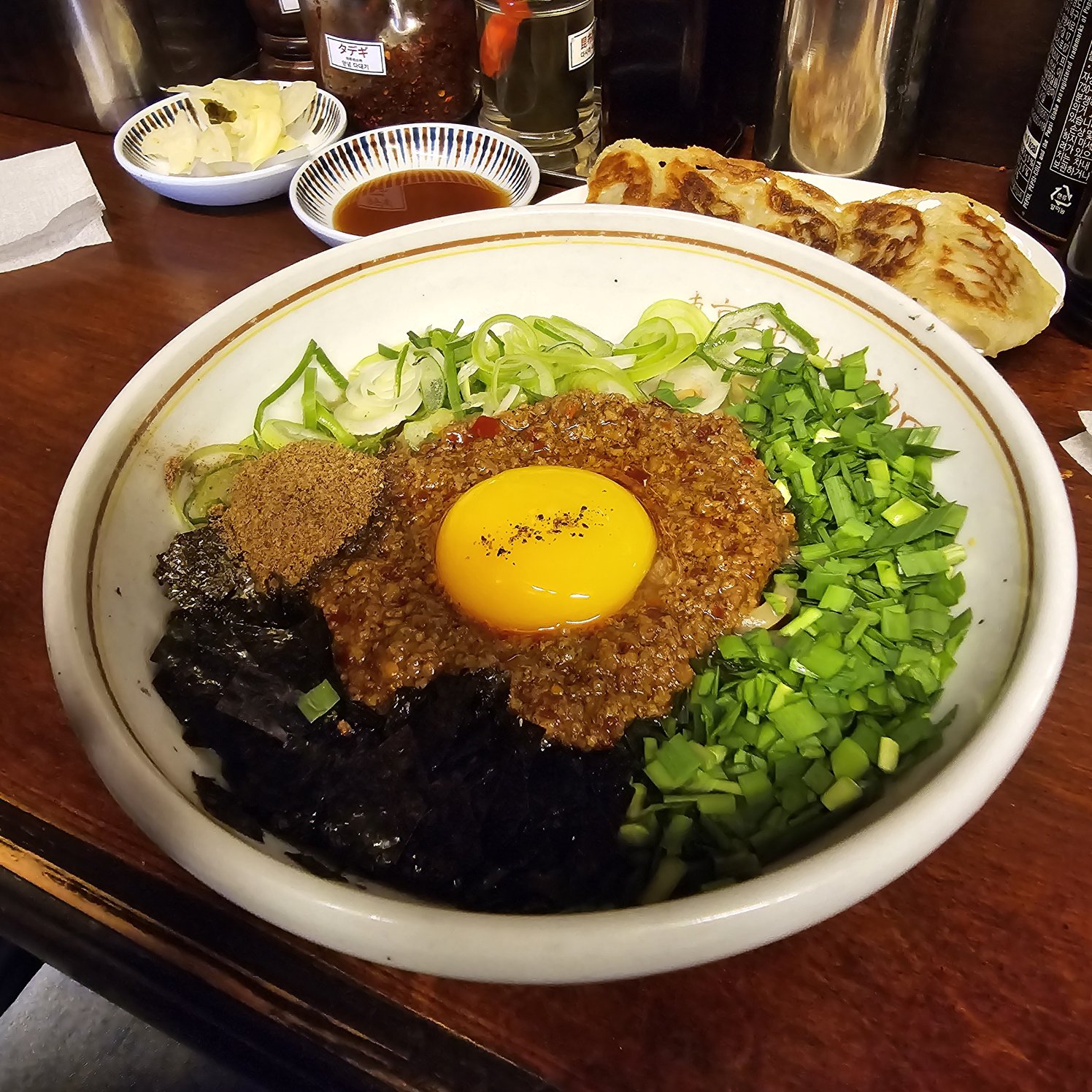 The legendary mazesoba — mix everything together and prepare to be amazed
You mix it all together yourself, and the egg yolk melts into the sauce creating this unbelievably rich, coating texture on every strand of noodle. The balance between the savory meat sauce, the fresh bite of the onions, and the umami from the seaweed and fish powder is just perfection. It’s bold, it’s messy, and it’s absolutely addictive.
Tip: each table has dashi vinegar and spicy dadegi (다데기) sauce — feel free to add a splash of either to customize the flavor to your liking. The vinegar cuts through the richness, while the dadegi kicks up the heat.
And if you’re still hungry after the noodles (like me — I’m a big guy), rice is free. Just ask the staff and they’ll bring you a bowl. Toss it into whatever sauce is left at the bottom, mix it around, and you’ve got yourself a perfect finishing move. Don’t be shy about it.
The Ramen Is No Joke Either
If mazesoba isn’t your thing (though I question your taste), their ramen is excellent too. Thick slices of chashu pork sit on top of a cloudy, deeply savory tonkotsu broth. The soft-boiled eggs are done perfectly — jammy yolks, every single time. And that wall of nori standing tall in the bowl? Pure drama and deliciousness.
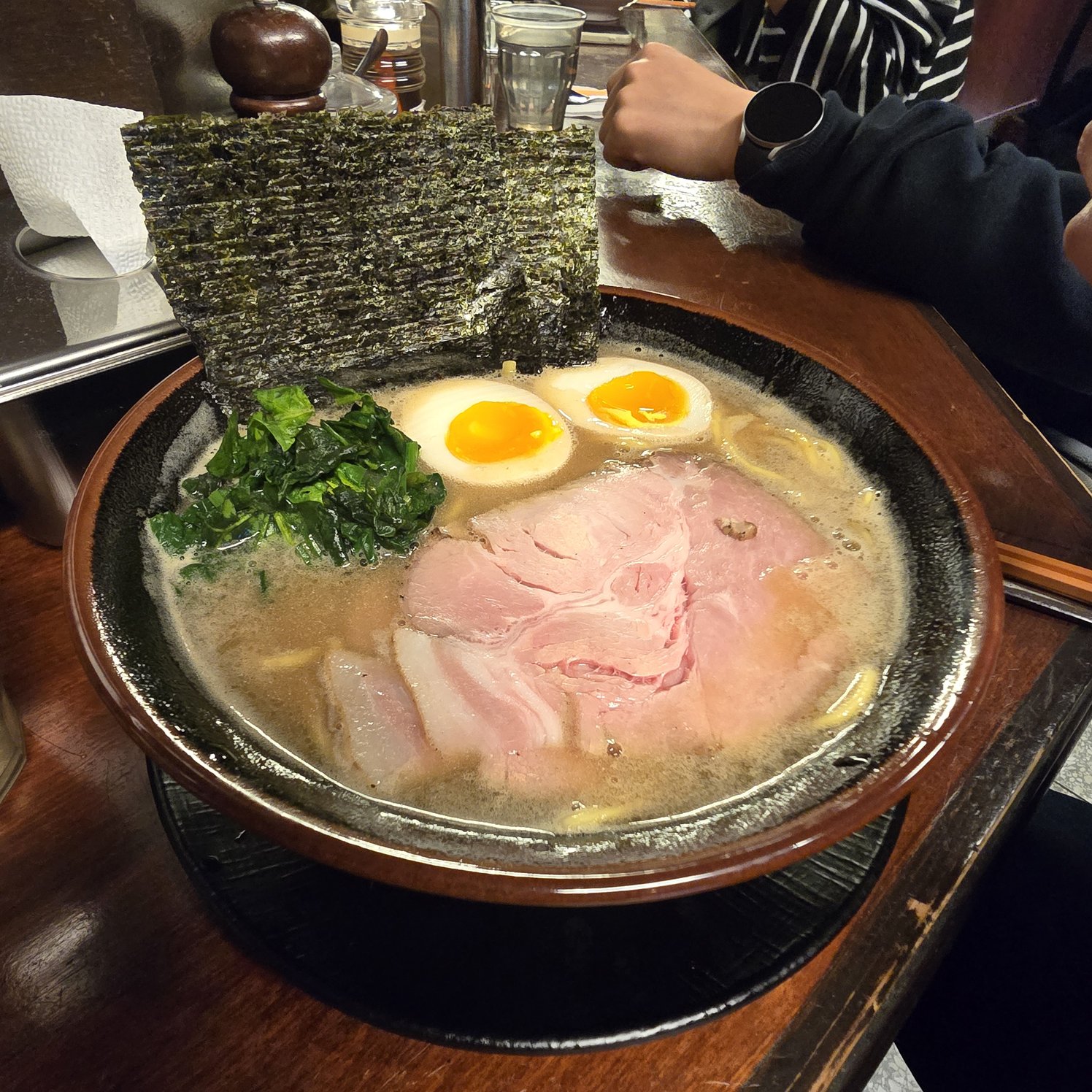 Rich tonkotsu ramen with chashu, soft-boiled egg, spinach, and a wall of nori
The One That Got Away: Abura Soba
My coworkers are obsessed with the pork skin abura soba (돼지껍데기 아부라소바). I was planning to photograph it for this post but — and I cannot stress this enough — they had already demolished it before I could even pull out my phone. That’s the kind of dish it is. It disappears the moment it hits the table.
If you visit, do yourself a favor and order one. Just eat faster than my coworkers do.
The Secret Weapon: Takuan (Pickled Radish)
Every table has a steel container of self-serve pickled radish (단무지/takuan), and let me tell you — it’s insanely good. It’s got that perfect sweet-tangy crunch that cleanses your palate between bites of rich mazesoba. I always go back for seconds. It sounds like a minor detail, but honestly, the pickled radish here elevates the whole meal.
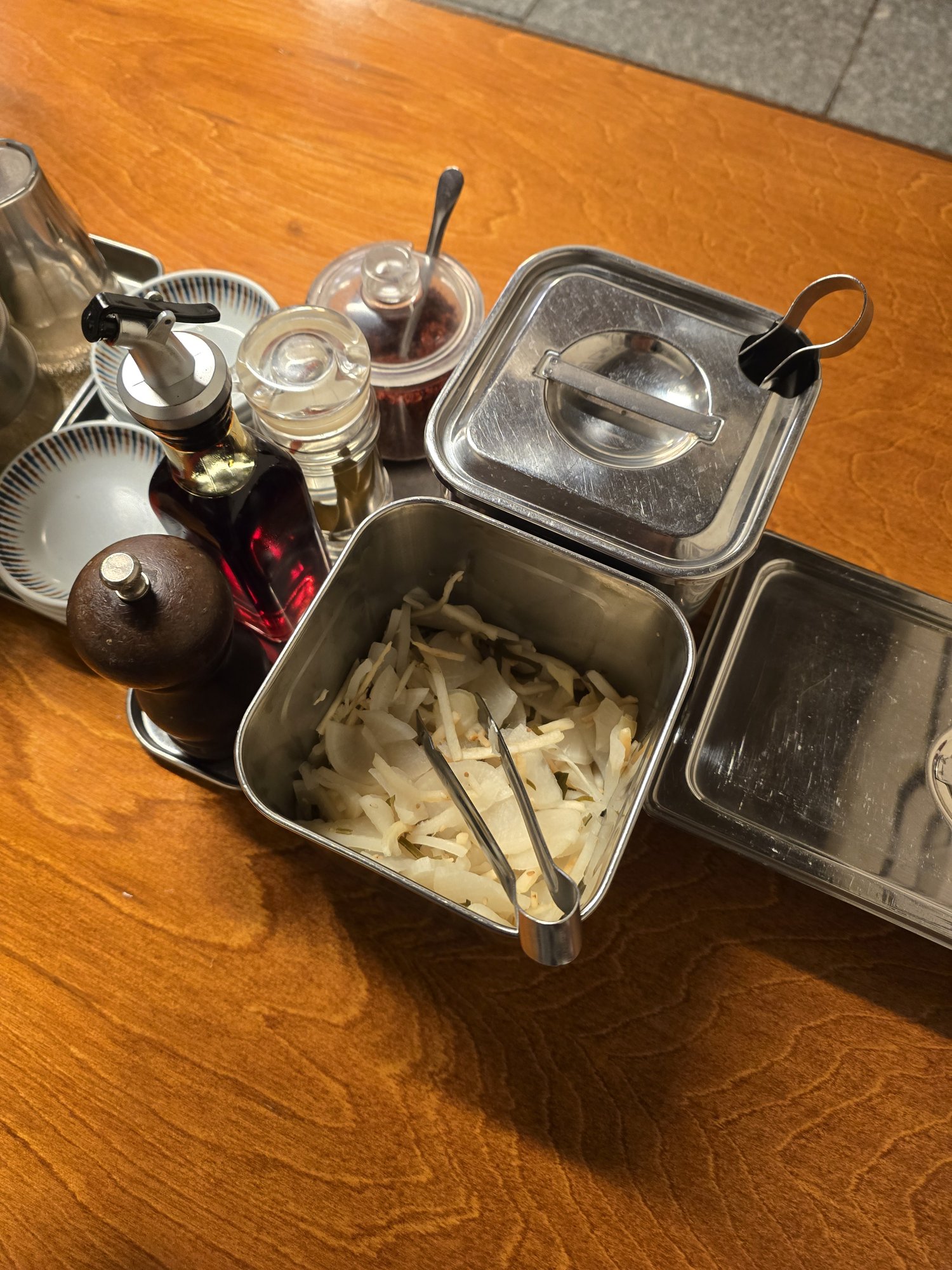
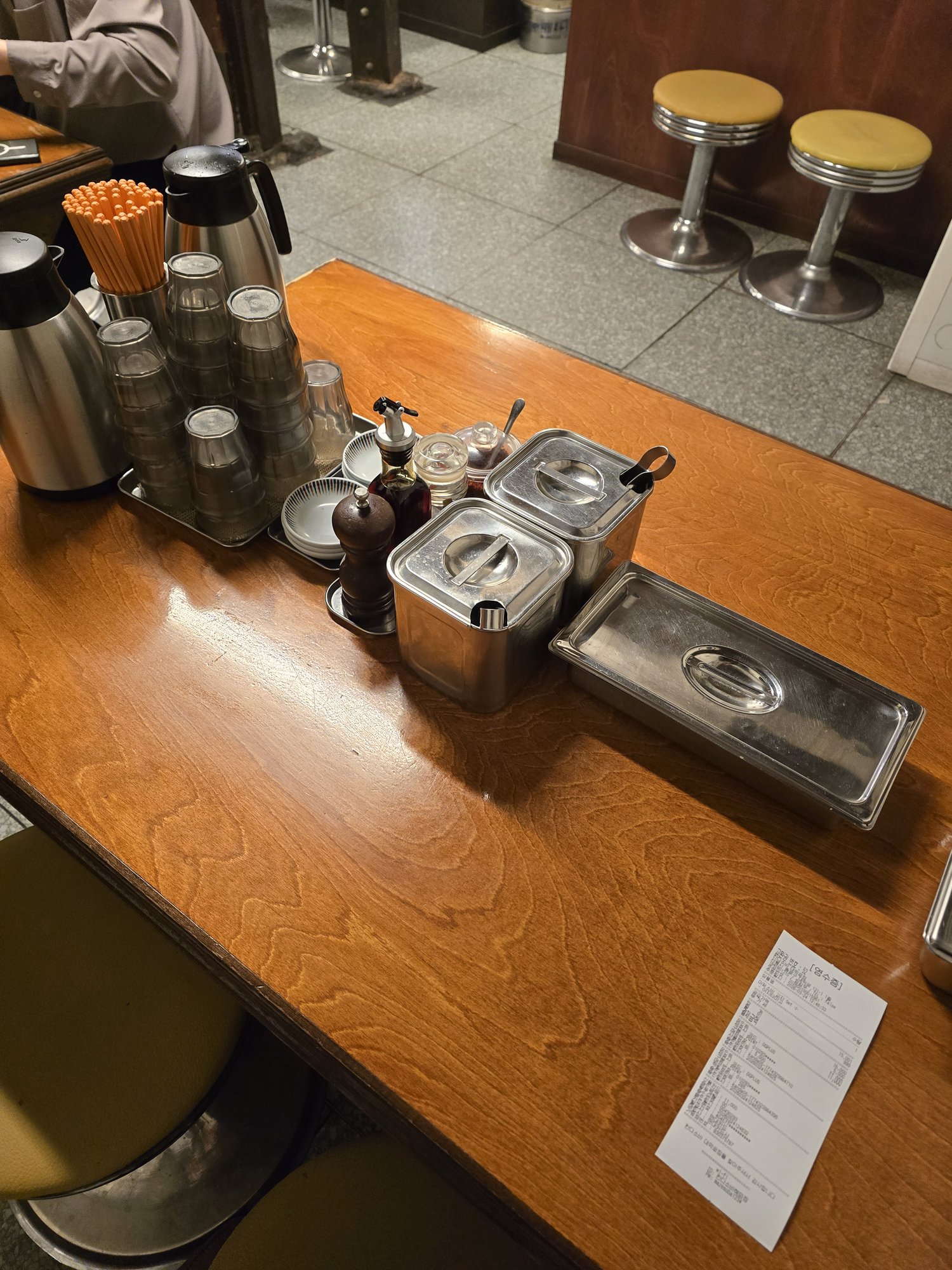
Self-serve pickled radish and condiments — grab as much takuan as you want
The Broth: 24 Hours of Dedication
On the wall, there’s a framed poster explaining their broth-making process. They use pork bones, chicken bones, and other ingredients, simmering them for over 24 hours in the traditional Tokyo style. After that, they add dried sardines, shrimp, and vegetables to build layers of umami. The finished broth is stored within 48 hours to keep it fresh.
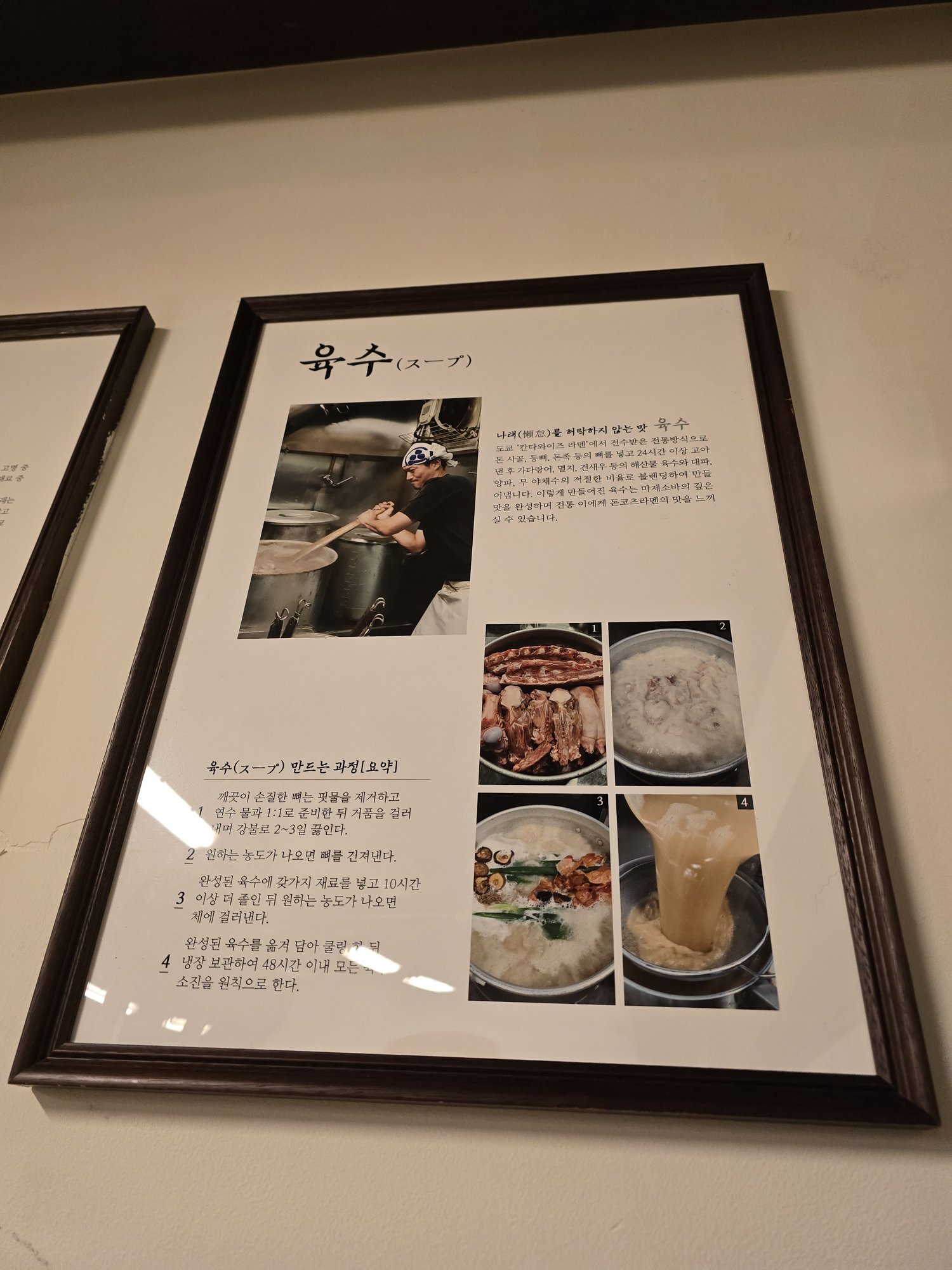
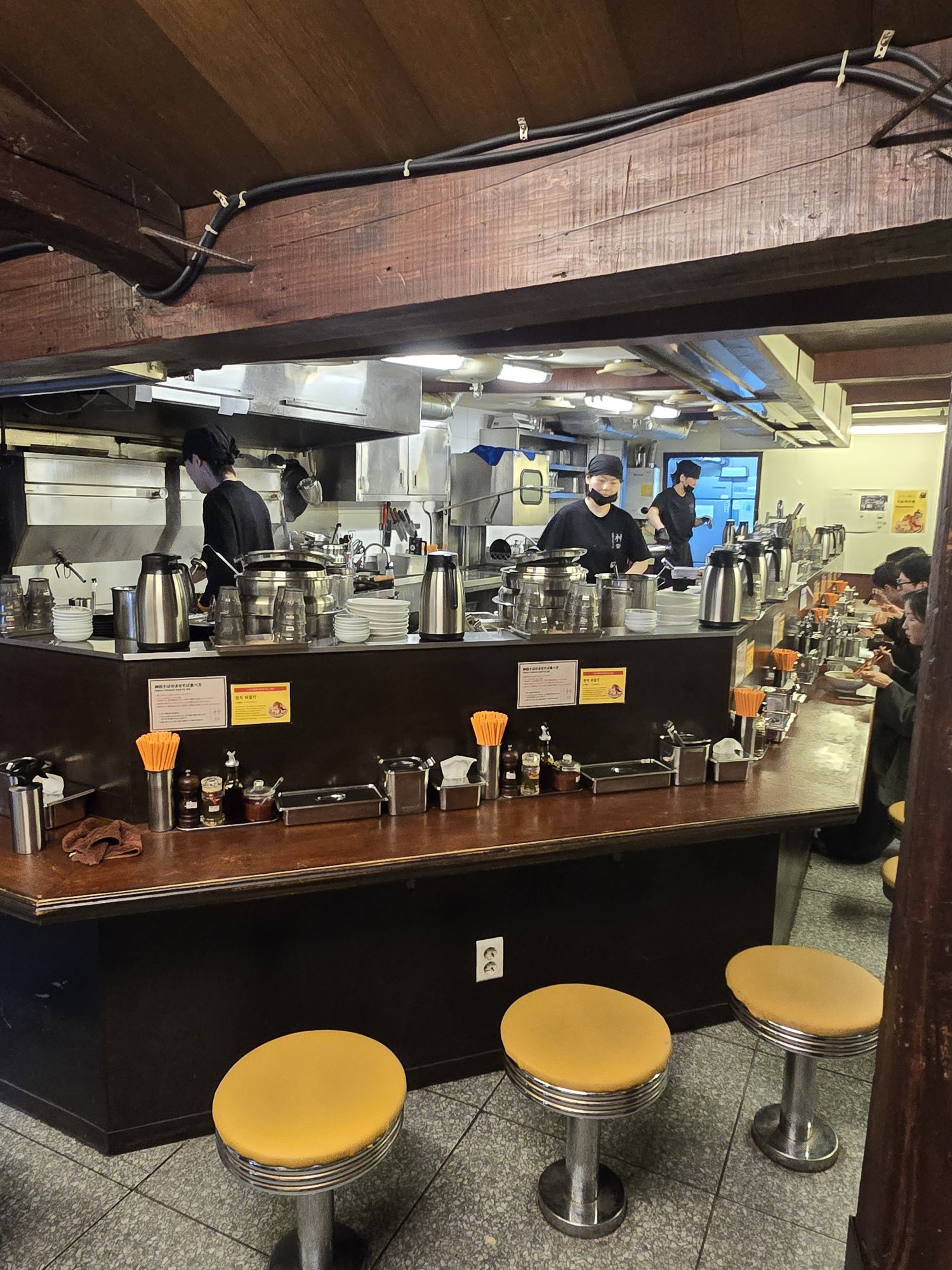
Left: Their 24-hour broth process, explained step by step. Right: The cozy counter-only seating with an open kitchen view
Practical Info
| Detail | Info |
|---|---|
| Restaurant | Kanda Soba (칸다소바 / 神田そば) |
| What to Order | Mazesoba, Abura Soba, Tonkotsu Ramen |
| Price | ~₩11,000 per dish / ~₩15,000 for Gyoza Set |
| Ordering | Kiosk (Korean, English, Japanese, Chinese) |
| Seating | Counter-only, open kitchen |
| Map | Google Maps |
FAQ
Q: What is mazesoba? A: Mazesoba (まぜそば) is a Japanese noodle dish — think of it as “brothless ramen.” Thick noodles are served with a concentrated sauce and toppings, and you mix everything together before eating. It’s bolder and more intense than regular ramen.
Q: Is Kanda Soba good for non-Korean speakers? A: Absolutely. They have a kiosk ordering system with menus in Korean, English, Japanese, and Chinese. Zero language barrier.
Q: How much does a meal cost at Kanda Soba? A: A single noodle dish (mazesoba or ramen) is around ₩11,000 (~$8 USD). Adding a gyoza set bumps it to about ₩15,000 (~$11 USD). Very reasonable for the quality.
Q: Is it crowded during lunch? A: Yes, especially between 12:00–13:00. It’s counter-only seating, so turnover is quick, but expect a short wait during peak hours.
Q: What’s the difference between mazesoba and abura soba? A: Both are brothless noodles, but abura soba uses oil-based sauce while mazesoba uses a thicker, more complex sauce with more toppings. Kanda Soba’s pork skin abura soba adds crispy pork skin for extra texture.
Q: Can I get extra toppings or sides? A: The condiment station is self-serve — pickled radish (takuan), chili oil, vinegar, pepper, and more. Help yourself to as much as you want.